







 Monday 16 Mar 2026
|
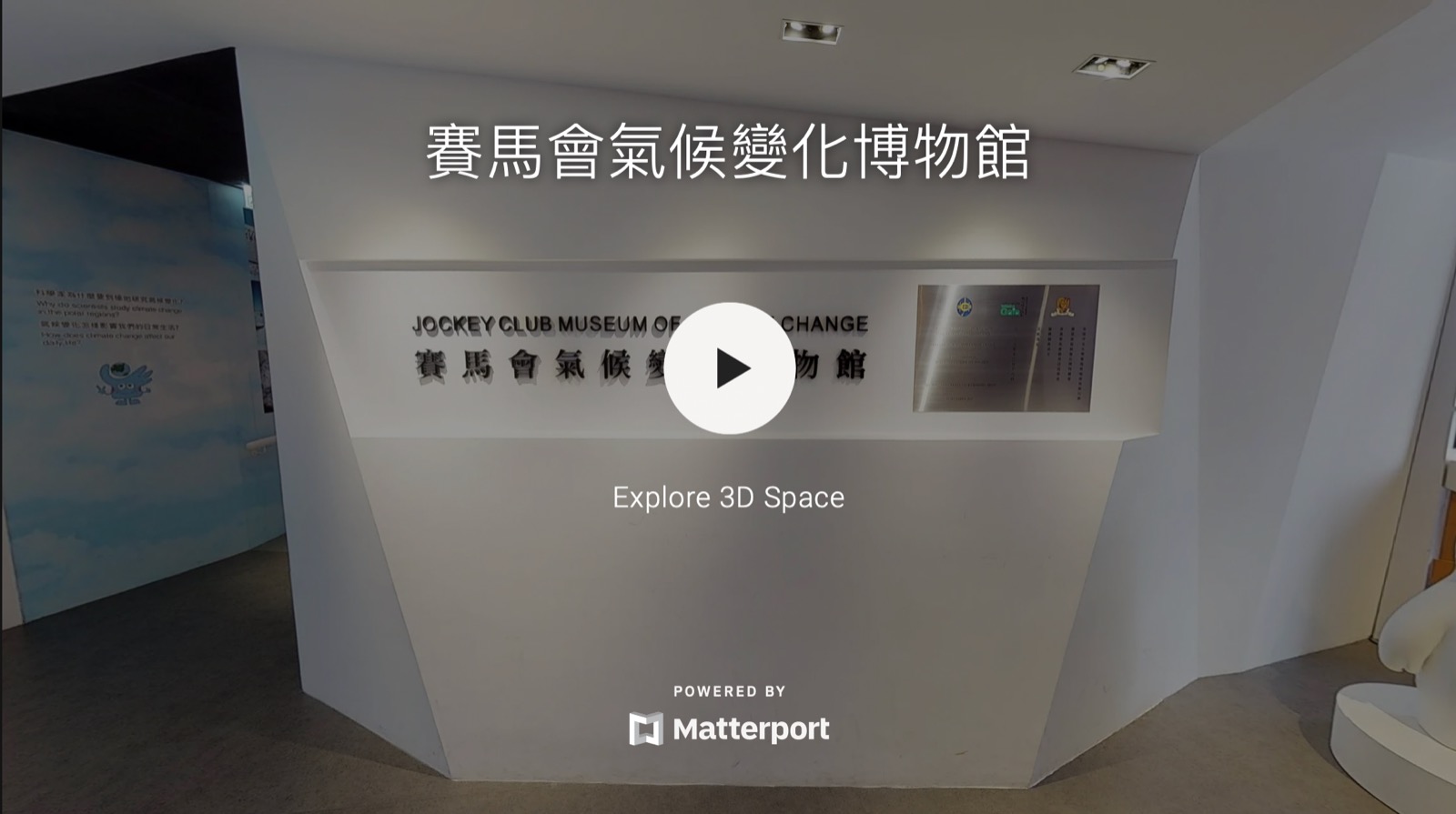
The Jockey Club Museum of Climate Change (MoCC) at The Chinese University of Hong Kong (CUHK) held its “Future of Ice: Climate Dialogues” panel discussion last Friday (13 March). The event gathered a group of experts to discuss glacier retreat and its impact, inspiring ideas to address the challenges posed by glacier change and build sustainable cities and communities. In his welcome address, Professor Yam Yeung, Director of the CUHK Shenzhen Research Institute and of CUHK’s Hong Kong Polar Science Innovation Centre, reaffirmed the MoCC’s role since its establishment in 2013 as a platform that brings together climate education, research outreach and public engagement. He also expressed his appreciation for making the event possible to NGO Rotary International District 3450 and the “Let the Glacier Cool” Conservation & Education Programme, a glacier preservation programme from the Northwest Institute of Eco-Environment and Resources, part of the Chinese Academy of Sciences, with sustainability-focused social enterprise Will Legend. He noted that glacier retreat, one of the clearest indicators of a warming planet and a driver of changes in freshwater systems, sea levels and ecosystems, formed part of the wider climate landscape explored at the event. Professor Wang Feiteng, Researcher at the Northwest Institute of Eco-Environment and Resources, delivered the keynote speech on China’s glacier conservation efforts. He showed how accelerating glacier melt in western China is reshaping river flow and heightening risks for downstream communities, and described national initiatives to monitor and conserve these critical glacier-fed basins. Professor Liu Lin, Associate Professor in CUHK’s Department of Earth and Environmental Sciences, accompanied by PhD student Mr Louis Yang, then shared observations from recent polar expeditions, describing the accelerating pace of change in high-latitude environments and emphasising the implications for global climate stability. A panel discussion on “The Impact of Glaciers on Sustainable Cities and Communities”, moderated by Professor Michael Pittman, Assistant Professor in CUHK’s School of Life Sciences, brought together Professor Wang, Professor Liu and Professor Chen Fei, Assistant Professor in CUHK’s Department of Mechanical and Automation Engineering, for a multidisciplinary conversation about the ways in which glacier retreat affects cities and communities. They noted that glaciers, though often perceived as remote landscapes, form the headwaters of major river basins and are closely linked to water supply, agricultural systems and coastal stability. They reflected on the evolving role of technologies such as robotics, AI-enabled monitoring and remote sensing in advancing glacier research and adaptation planning, while also emphasising that glacier change is a systems issue that calls for cross-sector collaboration to translate science into action. |